Léon-Yves Bottou (French pronunciation: [leɔ̃ bɔtu]; born 1965) is a researcher best known for his work in machine learning and data compression. His work presents stochastic gradient descent as a fundamental learning algorithm. He is also one of the main creators of the DjVu image compression technology (together with Yann LeCun and Patrick Haffner), and the maintainer of DjVuLibre, the open source implementation of DjVu. He is the original developer of the Lush programming language. == Life == Léon Bottou was born in France in 1965. He obtained the Diplôme d'Ingénieur from École Polytechnique in 1987, a Magistère de Mathématiques Fondamentales et Appliquées et d’Informatique from École Normale Supérieure in 1988, a Diplôme d'Études Approndies in Computer Science in 1988, in 1988, and a PhD from Université Paris-Sud in 1991. In 1988, in collaboration with Yann LeCun, he published SN, a software package for simulating artificial neural networks. His master's thesis concerned using Time Delay Neural Networks for speech recognition. He then joined the Adaptive Systems Research Department at AT&T Bell Laboratories in Holmdel, New Jersey, where he collaborated with Vladimir Vapnik on local learning algorithms. in 1992, he returned to France and founded Neuristique S.A., a company that produced machine learning tools and one of the first data mining software packages, including Lush, an object-oriented programming language based on C and Lisp designed for training and using large-scale neural networks. In 1995, he returned to Bell Laboratories, where he developed a number of new machine learning methods, such as Graph Transformer Networks (similar to conditional random field), and applied them to handwriting recognition and OCR. The bank check recognition system that he helped develop was widely deployed by NCR and other companies, reading over 10% of all the checks in the US in the late 1990s and early 2000s. In 1996, he joined AT&T Labs and worked primarily on the DjVu image compression technology, that is used by some websites, notably the Internet Archive, to distribute scanned documents. Between 2002 and 2010, he was a research scientist at NEC Laboratories in Princeton, New Jersey, where he focused on the theory and practice of machine learning with large-scale datasets, on-line learning, and stochastic optimization methods. He developed the open source software LaSVM for fast large-scale support vector machine, and stochastic gradient descent software for training linear SVM and Conditional Random Fields. In 2010 he joined the Microsoft adCenter in Redmond, Washington, and in 2012 became a Principal Researcher at Microsoft Research in New York City. In March 2015 he joined Facebook Artificial Intelligence Research, also in New York City, as a research lead. His work in gradient descent argued that both stochastic gradient descent and batch gradient descent reach similar levels of loss with the same number of training samples, but SGD is faster when running on large datasets. He also argued that second-order gradient descent methods, such as quasi-Newton methods, can be beneficial compared to plain SGD. See (Bottou et al 2018) for a review. He was program chair of the 2013 Conference on Neural Information Processing Systems and the 2009 International Conference on Machine Learning. In 2007, he was received one of the first Blavatnik Awards for Young Scientists from the Blavatnik Family Foundation and the New York Academy of Sciences.
Snapshot isolation
In databases, and transaction processing (transaction management), snapshot isolation is a guarantee that all reads made in a transaction will see a consistent snapshot of the database (in practice it reads the last committed values that existed at the time it started), and the transaction itself will successfully commit only if no updates it has made conflict with any concurrent updates made since that snapshot. Snapshot isolation has been adopted by several major database management systems, such as InterBase, Firebird, Oracle, MySQL, PostgreSQL, SQL Anywhere, MongoDB and Microsoft SQL Server (2005 and later). The main reason for its adoption is that it allows better performance than serializability, yet still avoids most of the concurrency anomalies that serializability avoids (but not all). In practice snapshot isolation is implemented within multiversion concurrency control (MVCC), where generational values of each data item (versions) are maintained: MVCC is a common way to increase concurrency and performance by generating a new version of a database object each time the object is written, and allowing transactions' read operations of several last relevant versions (of each object). Snapshot isolation has been used to criticize the ANSI SQL-92 standard's definition of isolation levels, as it exhibits none of the "anomalies" that the SQL standard prohibited, yet is not serializable (the anomaly-free isolation level defined by ANSI). In spite of its distinction from serializability, snapshot isolation is sometimes referred to as serializable by Oracle. == Definition == A transaction executing under snapshot isolation appears to operate on a personal snapshot of the database, taken at the start of the transaction. When the transaction concludes, it will successfully commit only if the values updated by the transaction have not been changed externally since the snapshot was taken. Such a write–write conflict will cause the transaction to abort. In a write skew anomaly, two transactions (T1 and T2) concurrently read an overlapping data set (e.g. values V1 and V2), concurrently make disjoint updates (e.g. T1 updates V1, T2 updates V2), and finally concurrently commit, neither having seen the update performed by the other. Were the system serializable, such an anomaly would be impossible, as either T1 or T2 would have to occur "first", and be visible to the other. In contrast, snapshot isolation permits write skew anomalies. As a concrete example, imagine V1 and V2 are two balances held by a single person, Phil. The bank will allow either V1 or V2 to run a deficit, provided the total held in both is never negative (i.e. V1 + V2 ≥ 0). Both balances are currently $100. Phil initiates two transactions concurrently, T1 withdrawing $200 from V1, and T2 withdrawing $200 from V2. If the database guaranteed serializable transactions, the simplest way of coding T1 is to deduct $200 from V1, and then verify that V1 + V2 ≥ 0 still holds, aborting if not. T2 similarly deducts $200 from V2 and then verifies V1 + V2 ≥ 0. Since the transactions must serialize, either T1 happens first, leaving V1 = −$100, V2 = $100, and preventing T2 from succeeding (since V1 + (V2 − $200) is now −$200), or T2 happens first and similarly prevents T1 from committing. If the database is under snapshot isolation(MVCC), however, T1 and T2 operate on private snapshots of the database: each deducts $200 from an account, and then verifies that the new total is zero, using the other account value that held when the snapshot was taken. Since neither update conflicts, both commit successfully, leaving V1 = V2 = −$100, and V1 + V2 = −$200. Some systems built using multiversion concurrency control (MVCC) may support (only) snapshot isolation to allow transactions to proceed without worrying about concurrent operations, and more importantly without needing to re-verify all read operations when the transaction finally commits. This is convenient because MVCC maintains a series of recent history consistent states. The only information that must be stored during the transaction is a list of updates made, which can be scanned for conflicts fairly easily before being committed. However, MVCC systems (such as MarkLogic) will use locks to serialize writes together with MVCC to obtain some of the performance gains and still support the stronger "serializability" level of isolation. == Workarounds == Potential inconsistency problems arising from write skew anomalies can be fixed by adding (otherwise unnecessary) updates to the transactions in order to enforce the serializability property. Materialize the conflict Add a special conflict table, which both transactions update in order to create a direct write–write conflict. Promotion Have one transaction "update" a read-only location (replacing a value with the same value) in order to create a direct write–write conflict (or use an equivalent promotion, e.g. Oracle's SELECT FOR UPDATE). In the example above, we can materialize the conflict by adding a new table which makes the hidden constraint explicit, mapping each person to their total balance. Phil would start off with a total balance of $200, and each transaction would attempt to subtract $200 from this, creating a write–write conflict that would prevent the two from succeeding concurrently. However, this approach violates the normal form. Alternatively, we can promote one of the transaction's reads to a write. For instance, T2 could set V1 = V1, creating an artificial write–write conflict with T1 and, again, preventing the two from succeeding concurrently. This solution may not always be possible. In general, therefore, snapshot isolation puts some of the problem of maintaining non-trivial constraints onto the user, who may not appreciate either the potential pitfalls or the possible solutions. The upside to this transfer is better performance. == Terminology == Snapshot isolation is called "serializable" mode in Oracle and PostgreSQL versions prior to 9.1, which may cause confusion with the "real serializability" mode. There are arguments both for and against this decision; what is clear is that users must be aware of the distinction to avoid possible undesired anomalous behavior in their database system logic. == History == Snapshot isolation arose from work on multiversion concurrency control databases, where multiple versions of the database are maintained concurrently to allow readers to execute without colliding with writers. Such a system allows a natural definition and implementation of such an isolation level. InterBase, later owned by Borland, was acknowledged to provide SI rather than full serializability in version 4, and likely permitted write-skew anomalies since its first release in 1985. Unfortunately, the ANSI SQL-92 standard was written with a lock-based database in mind, and hence is rather vague when applied to MVCC systems. Berenson et al. wrote a paper in 1995 critiquing the SQL standard, and cited snapshot isolation as an example of an isolation level that did not exhibit the standard anomalies described in the ANSI SQL-92 standard, yet still had anomalous behaviour when compared with serializable transactions. In 2008, Cahill et al. showed that write-skew anomalies could be prevented by detecting and aborting "dangerous" triplets of concurrent transactions. This implementation of serializability is well-suited to multiversion concurrency control databases, and has been adopted in PostgreSQL 9.1, where it is known as Serializable Snapshot Isolation (SSI). When used consistently, this eliminates the need for the above workarounds. The downside over snapshot isolation is an increase in aborted transactions. This can perform better or worse than snapshot isolation with the above workarounds, depending on workload.
Biohybrid system
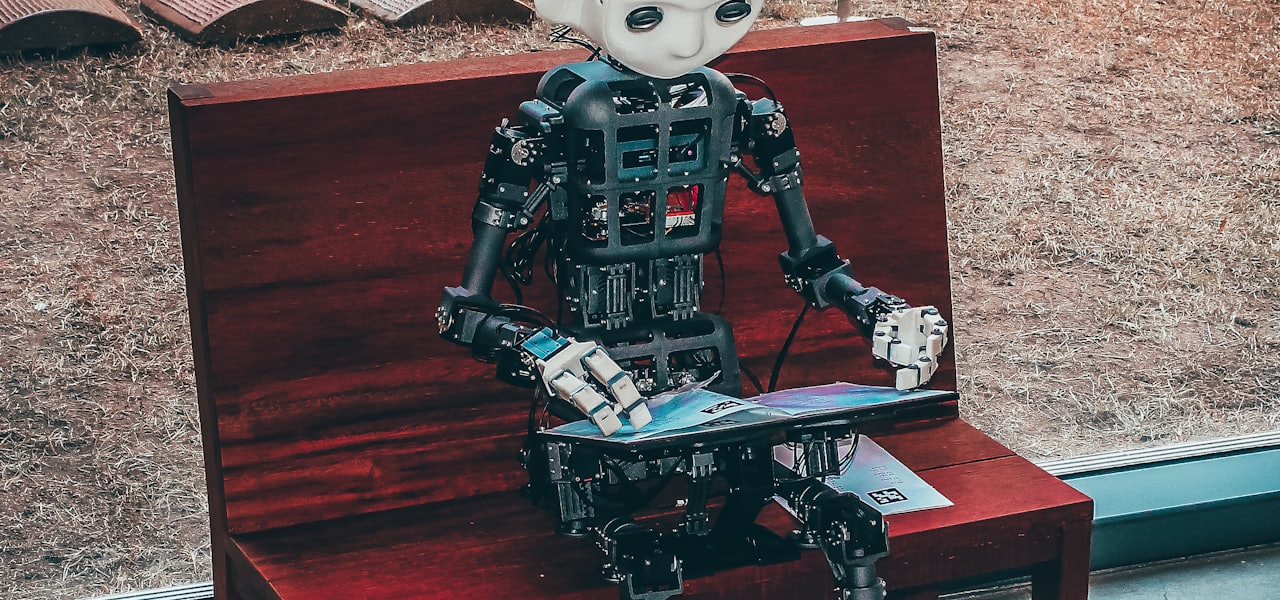
Biohybrid systems refer to the integration of biological materials, such as cells or tissues, with artificial components, including electronics or mechanical structure. This combination incorporates the capabilities of living organisms with the precision of man-made technology. As a result, these systems perform tasks that neither biology nor machines could achieve independently. Biohybrid systems might use lab-cultured muscle cells to power small robots or combine sensors with living tissue for better health sensing. The intent behind these systems is to combine the benefits of biological and technological components to introduce new solutions for complex medical challenges. Biohybrid systems may have transformative potential across sectors, such as robotics to create actuators and sensors that mimic natural muscle and nerve function, medicine in developing smart implants and drug delivery systems, in prosthetics for enhancing user control through neural or muscular interfaces and environmental sustainability for deploying biohybrid solutions for pollution sensing or remediation. == Origin == The term "biohybrid" is a compound of "bio" from biology (meaning life) and "hybrid" (referring to a combination of distinct elements), denoting a field of study. Its use helps distinguish such systems from purely biological constructs or entirely synthetic machines. Early academic mentions may include bio actuated robotics papers and foundational tissue-robot integration studies published in journals like Nature Biotechnology or Science Robotics. The emergence of the term reflects a growing recognition of the need to describe systems that do not fit cleanly into traditional categories. == Design principles == One of the most significant biohybrid challenges is to engineer interfaces between living tissue and artificial materials that are efficient. This means having precise control over adhesion at the surface, diffusion of nutrients, and signal conduction. Actuation mechanisms within the heart of these systems generate movement or mechanical response. These may be in the form of living muscle cells such as skeletal myocytes or cardiomyocytes, soft pneumatic actuators, or electrical stimulation-responsive tissues. Materials selection is equally critical. Hydrogels, elastomers like PDMS (polydimethylsiloxane), and biopolymers are commonly used due to their softness and biocompatibility. These materials must support cell viability, resist immune attack, and allow the integration of mechanical or electrical components. == Key components == At their core, biohybrid systems work by bridging living biological parts with technology. Through this integration, functionality that neither system could accomplish singularly is possible. Biological parts may be cells, tissues, or even organs—occasionally cultured in a laboratory setting. These biological parts carry out biologically inspired behaviors, such as muscle contraction or chemical sensing in the body. Technological components may constitute devices like sensors, electronic components, and mechanical structure. These manipulate the system, supply power, or transfer data. An example is a sensor that is implantable within a body and detects glucose levels as it sends information to a smart phone. By integrating these artificial and biological parts, biohybrid systems can perform advanced functions, such as tissue regeneration, real-time health monitoring, or the recovery of motor function in paralysis patients. Biohybrid systems generally consist of two major components: the biological and the mechanical. Biological components may include muscle cells for contraction, endothelial cells for vascularization, and stem cells for regenerative capabilities. Mechanical components comprise soft actuators that mimic organic motion, synthetic scaffolds that provide support and structure, and microfluidic systems that facilitate the delivery of nutrients and removal of waste. These components are combined in a manner that allows for dynamic, lifelike behavior—such as the contraction of tissue or the propagation of mechanical waves—while maintaining biocompatibility and durability. == Applications == The range of applications for biohybrid systems is broad and continuously expanding. In robotics, biohybrid structures have been used to engineer microscopic, muscle-driven machines, such as Harvard University's biohybrid stingray robot. In medical applications, they offer new alternatives for organ repair and augmentation, including biohybrid heart valves and esophageal scaffolds. Biohybrids are also promising in neural interfaces, where the goal is to create long-lasting, stable interaction between mechanical devices and brain tissue. Muscle-actuated drug response platforms are under exploration in pharmacology for modelling and real-time screening. == Examples == Several high-profile research projects have demonstrated the potential of biohybrid systems: Harvard researchers developed a biohybrid swimming ray powered by rat cardiac cells layered onto a gold skeleton, mimicking the motion of a real stingray. At the Massachusetts Institute of Technology, a cardiac pump actuated entirely by living heart muscle cells was engineered to simulate the behavior of a beating heart. Bio actuated soft robots have been built to simulate gut peristalsis, using muscle contractions to replicate natural wave-like movement in the digestive tract. == Challenges and limitations == As with many technologies that involve living systems, biohybrid systems raise important ethical and biomedical questions. Cell sourcing remains a key issue, particularly when embryonic or animal-derived cells are used. Long-term viability is another concern—living tissues must be kept alive with nutrients and oxygen, and they often degrade or elicit immune responses when implanted. Powering these biological parts presents logistical and ethical hurdles as well. Systems must either include internal mechanisms for nutrient delivery or be supported externally, which can limit portability and independence. == Future directions == Researchers are exploring self-directed, self-regulated organ substitutes and regenerative implants that can respond to their surroundings in real-time. These systems may be integrated with artificial intelligence to make them adjust to stimuli and coordinate complex behaviors. Future potential applications are wearable biohybrid systems for rehabilitation, space medicine devices for long-duration missions, and implantable devices that integrate into human physiology.
SUPS
In computational neuroscience, SUPS (for Synaptic Updates Per Second) or formerly CUPS (Connections Updates Per Second) is a measure of a neuronal network performance, useful in fields of neuroscience, cognitive science, artificial intelligence, and computer science. == Computing == For a processor or computer designed to simulate a neural network SUPS is measured as the product of simulated neurons N {\displaystyle N} and average connectivity c {\displaystyle c} (synapses) per neuron per second: S U P S = c × N {\displaystyle SUPS=c\times N} Depending on the type of simulation it is usually equal to the total number of synapses simulated. In an "asynchronous" dynamic simulation if a neuron spikes at υ {\displaystyle \upsilon } Hz, the average rate of synaptic updates provoked by the activity of that neuron is υ c N {\displaystyle \upsilon cN} . In a synchronous simulation with step Δ t {\displaystyle \Delta t} the number of synaptic updates per second would be c N Δ t {\displaystyle {\frac {cN}{\Delta t}}} . As Δ t {\displaystyle \Delta t} has to be chosen much smaller than the average interval between two successive afferent spikes, which implies Δ t < 1 υ N {\displaystyle \Delta t<{\frac {1}{\upsilon N}}} , giving an average of synaptic updates equal to υ c N 2 {\displaystyle \upsilon cN^{2}} . Therefore, spike-driven synaptic dynamics leads to a linear scaling of computational complexity O(N) per neuron, compared with the O(N2) in the "synchronous" case. == Records == Developed in the 1980s Adaptive Solutions' CNAPS-1064 Digital Parallel Processor chip is a full neural network (NNW). It was designed as a coprocessor to a host and has 64 sub-processors arranged in a 1D array and operating in a SIMD mode. Each sub-processor can emulate one or more neurons and multiple chips can be grouped together. At 25 MHz it is capable of 1.28 GMAC. After the presentation of the RN-100 (12 MHz) single neuron chip at Seattle 1991 Ricoh developed the multi-neuron chip RN-200. It had 16 neurons and 16 synapses per neuron. The chip has on-chip learning ability using a proprietary backdrop algorithm. It came in a 257-pin PGA encapsulation and drew 3.0 W at a maximum. It was capable of 3 GCPS (1 GCPS at 32 MHz). In 1991–97, Siemens developed the MA-16 chip, SYNAPSE-1 and SYNAPSE-3 Neurocomputer. The MA-16 was a fast matrix-matrix multiplier that can be combined to form systolic arrays. It could process 4 patterns of 16 elements each (16-bit), with 16 neuron values (16-bit) at a rate of 800 MMAC or 400 MCPS at 50 MHz. The SYNAPSE3-PC PCI card contained 2 MA-16 with a peak performance of 2560 MOPS (1.28 GMAC); 7160 MOPS (3.58 GMAC) when using three boards. In 2013, the K computer was used to simulate a neural network of 1.73 billion neurons with a total of 10.4 trillion synapses (1% of the human brain). The simulation ran for 40 minutes to simulate 1 s of brain activity at a normal activity level (4.4 on average). The simulation required 1 Petabyte of storage.
Wadhwani Institute for Artificial Intelligence
Wadhwani AI, based in Mumbai, Maharashtra, is an independent, non-profit institute. Founded in 2018, it is dedicated to developing Artificial intelligence solutions for social good. Their mission is to build AI-based innovations and solutions for underserved communities in developing countries, for a wide range of domains including agriculture, education, financial inclusion, healthcare, and infrastructure. == History and funding == The institute was founded with a $30 million philanthropic effort by the Wadhwani brothers, Romesh Wadhwani and Sunil Wadhwani. The institute was inaugurated and dedicated to the nation by Narendra Modi, the 14th Prime Minister of India. In 2019, the institute received a $2 million grant from Google.org to create technologies to help reduce crop losses in cotton farming, through integrated pest management. The United States Agency for International Development awarded $2 million to the institute in 2020 to develop tools, using mathematical modeling techniques and digital technologies such as artificial intelligence and machine learning, to forecast COVID-19 disease patterns, estimate resources needed, and plan interventions. == Collaboration == With assistance from Google, the Ministry of Agriculture and Farmers' Welfare and the Wadhwani AI developed Krishi 24/7, the first AI-powered automated agricultural news monitoring and analysis tool. Through better decision-making, Krishi 24/7 will support the identification of valuable news, provide timely notifications, and respond quickly to safeguard farmers' interests and advance sustainable agricultural growth. The application converts news articles into English after scanning them in several languages. It ensures that the ministry is informed in a timely manner about pertinent occurrences that are published online by extracting key information from news items, including the headline, crop name, event type, date, location, severity, summary, and source link. The National Center for Disease Control has effectively implemented a comparable automated surveillance and analysis tool for disease outbreaks.
Deadbot
A deadbot, deathbot, or griefbot is a digital avatar, created with artificial intelligence, which resembles a person who is dead. Griefbots employ natural language processing and machine-learning techniques to approximate the style and personality of a deceased person. They may appear as chatbots, voice assistants, or animated avatars, and are often trained on an individual's digital remains. == History == Among the earliest researchers, Muhammad Aurangzeb Ahmad of the University of Washington, developed the Grandpa Bot project, a conversational simulation of his late father designed for his children to interact with. Other efforts include journalist James Vlahos's Dadbot, which evolved into the commercial platform HereAfter AI. Hossein Rahnama's Augmented Eternity research at MIT Media Lab and Toronto Metropolitan University, and game designer Jason Rohrer's "Project December", have enabled users to converse with language-model representations of loved ones. Early commercial projects such as Eternime, founded by Marius Ursache, also popularized the notion of interactive digital immortality. == Cultural and societal impact == Scholars have proposed frameworks and critiques addressing the ethics of these technologies. Tomasz Hollanek and Katarzyna Nowaczyk-Basińska developed a design-ethics taxonomy distinguishing the data donor, data recipient, and interactant. Edina Harbinja and Lilian Edwards formalized the concept of post-mortem privacy, and Carl J. Öhman at the Oxford Internet Institute studied the management of large-scale digital remains. Cultural acceptance varies: while some view them as expressions of remembrance, others regard them as unsettling or ethically problematic. Concerns have been raised about deadbots' potential for creating psychological harm. Griefbots are considered part of the phenomenon of artificial intimacy.
Outline of machine learning
The following outline is provided as an overview of, and topical guide to, machine learning: Machine learning (ML) is a subfield of artificial intelligence within computer science that evolved from the study of pattern recognition and computational learning theory. In 1959, Arthur Samuel defined machine learning as a "field of study that gives computers the ability to learn without being explicitly programmed". ML involves the study and construction of algorithms that can learn from and make predictions on data. These algorithms operate by building a model from a training set of example observations to make data-driven predictions or decisions expressed as outputs, rather than following strictly static program instructions. == How can machine learning be categorized? == An academic discipline A branch of science An applied science A subfield of computer science A branch of artificial intelligence A subfield of soft computing Application of statistics === Paradigms of machine learning === Supervised learning, where the model is trained on labeled data Unsupervised learning, where the model tries to identify patterns in unlabeled data Reinforcement learning, where the model learns to make decisions by receiving rewards or penalties. == Applications of machine learning == Applications of machine learning Bioinformatics Biomedical informatics Computer vision Customer relationship management Data mining Earth sciences Email filtering Inverted pendulum (balance and equilibrium system) Natural language processing Named Entity Recognition Automatic summarization Automatic taxonomy construction Dialog system Grammar checker Language recognition Handwriting recognition Optical character recognition Speech recognition Text to Speech Synthesis Speech Emotion Recognition Machine translation Question answering Speech synthesis Text mining Term frequency–inverse document frequency Text simplification Pattern recognition Facial recognition system Handwriting recognition Image recognition Optical character recognition Speech recognition Recommendation system Collaborative filtering Content-based filtering Hybrid recommender systems Search engine Search engine optimization Social engineering == Machine learning hardware == Graphics processing unit Tensor processing unit Vision processing unit == Machine learning tools == Comparison of machine learning software Comparison of deep learning software === Machine learning frameworks === ==== Proprietary machine learning frameworks ==== Amazon Machine Learning Microsoft Azure Machine Learning Studio DistBelief (replaced by TensorFlow) ==== Open source machine learning frameworks ==== Apache Singa Apache MXNet Caffe PyTorch mlpack TensorFlow Torch CNTK Accord.Net Jax MLJ.jl – A machine learning framework for Julia === Machine learning libraries === Deeplearning4j Theano scikit-learn Keras === Machine learning algorithms === == Machine learning methods == === Instance-based algorithm === K-nearest neighbors algorithm (KNN) Learning vector quantization (LVQ) Self-organizing map (SOM) === Regression analysis === Logistic regression Ordinary least squares regression (OLSR) Linear regression Stepwise regression Multivariate adaptive regression splines (MARS) Regularization algorithm Ridge regression Least Absolute Shrinkage and Selection Operator (LASSO) Elastic net Least-angle regression (LARS) Classifiers Probabilistic classifier Naive Bayes classifier Binary classifier Linear classifier Hierarchical classifier === Dimensionality reduction === Dimensionality reduction Canonical correlation analysis (CCA) Factor analysis Feature extraction Feature selection Independent component analysis (ICA) Linear discriminant analysis (LDA) Multidimensional scaling (MDS) Non-negative matrix factorization (NMF) Partial least squares regression (PLSR) Principal component analysis (PCA) Principal component regression (PCR) Projection pursuit Sammon mapping t-distributed stochastic neighbor embedding (t-SNE) === Ensemble learning === Ensemble learning AdaBoost Boosting Bootstrap aggregating (also "bagging" or "bootstrapping") Ensemble averaging Gradient boosted decision tree (GBDT) Gradient boosting Random Forest Stacked Generalization === Meta-learning === Meta-learning Inductive bias Metadata === Reinforcement learning === Reinforcement learning Q-learning State–action–reward–state–action (SARSA) Temporal difference learning (TD) Learning Automata === Supervised learning === Supervised learning Averaged one-dependence estimators (AODE) Artificial neural network Case-based reasoning Gaussian process regression Gene expression programming Group method of data handling (GMDH) Inductive logic programming Instance-based learning Lazy learning Learning Automata Learning Vector Quantization Logistic Model Tree Minimum message length (decision trees, decision graphs, etc.) Nearest Neighbor Algorithm Analogical modeling Probably approximately correct learning (PAC) learning Ripple down rules, a knowledge acquisition methodology Symbolic machine learning algorithms Support vector machines Random Forests Ensembles of classifiers Bootstrap aggregating (bagging) Boosting (meta-algorithm) Ordinal classification Conditional Random Field ANOVA Quadratic classifiers k-nearest neighbor Boosting SPRINT Bayesian networks Naive Bayes Hidden Markov models Hierarchical hidden Markov model ==== Bayesian ==== Bayesian statistics Bayesian knowledge base Naive Bayes Gaussian Naive Bayes Multinomial Naive Bayes Averaged One-Dependence Estimators (AODE) Bayesian Belief Network (BBN) Bayesian Network (BN) ==== Decision tree algorithms ==== Decision tree algorithm Decision tree Classification and regression tree (CART) Iterative Dichotomiser 3 (ID3) C4.5 algorithm C5.0 algorithm Chi-squared Automatic Interaction Detection (CHAID) Decision stump Conditional decision tree ID3 algorithm Random forest SLIQ ==== Linear classifier ==== Linear classifier Fisher's linear discriminant Linear regression Logistic regression Multinomial logistic regression Naive Bayes classifier Perceptron Support vector machine === Unsupervised learning === Unsupervised learning Expectation-maximization algorithm Vector Quantization Generative topographic map Information bottleneck method Association rule learning algorithms Apriori algorithm Eclat algorithm ==== Artificial neural networks ==== Artificial neural network Feedforward neural network Extreme learning machine Convolutional neural network Recurrent neural network Long short-term memory (LSTM) Logic learning machine Self-organizing map ==== Association rule learning ==== Association rule learning Apriori algorithm Eclat algorithm FP-growth algorithm ==== Hierarchical clustering ==== Hierarchical clustering Single-linkage clustering Conceptual clustering ==== Cluster analysis ==== Cluster analysis BIRCH DBSCAN Expectation–maximization (EM) Fuzzy clustering Hierarchical clustering k-means clustering k-medians Mean-shift OPTICS algorithm ==== Anomaly detection ==== Anomaly detection k-nearest neighbors algorithm (k-NN) Local outlier factor === Semi-supervised learning === Semi-supervised learning Active learning Generative models Low-density separation Graph-based methods Co-training Transduction === Deep learning === Deep learning Deep belief networks Deep Boltzmann machines Deep Convolutional neural networks Deep Recurrent neural networks Hierarchical temporal memory Generative Adversarial Network Style transfer Transformer Stacked Auto-Encoders === Other machine learning methods and problems === Anomaly detection Association rules Bias-variance dilemma Classification Multi-label classification Clustering Data Pre-processing Empirical risk minimization Feature engineering Feature learning Learning to rank Occam learning Online machine learning PAC learning Regression Reinforcement Learning Semi-supervised learning Statistical learning Structured prediction Graphical models Bayesian network Conditional random field (CRF) Hidden Markov model (HMM) Unsupervised learning VC theory == Machine learning research == List of artificial intelligence projects List of datasets for machine learning research == History of machine learning == History of machine learning Timeline of machine learning == Machine learning projects == Machine learning projects: DeepMind Google Brain OpenAI Meta AI Hugging Face == Machine learning organizations == === Machine learning conferences and workshops === Artificial Intelligence and Security (AISec) (co-located workshop with CCS) Conference on Neural Information Processing Systems (NIPS) ECML PKDD International Conference on Machine Learning (ICML) ML4ALL (Machine Learning For All) == Machine learning publications == === Books on machine learning === Mathematics for Machine Learning Hands-On Machine Learning Scikit-Learn, Keras, and TensorFlow The Hundred-Page Machine Learning Book === Machine learning journals === Machine Learning Journal of Machine Learning Research (JMLR) Neural Computation == Pe